Production model
250 kg / week
Establish buyers, crop performance and a repeatable production system for 250 kg/week.
- Shed allowance
- 300 m²
- Fruiting rooms
- 4 × 24 m²
- Incubation allowance
- 60 m²
Western Cape · South Africa
Gourmet mushrooms. A practical beginning.
A vision designed to grow.
Myco Vera is developing an owner-managed mushroom farm on land already acquired in the Western Cape. The plan brings oyster, king oyster and shimeji cultivation together inside a modular production shed.
Production model
Establish buyers, crop performance and a repeatable production system for 250 kg/week.
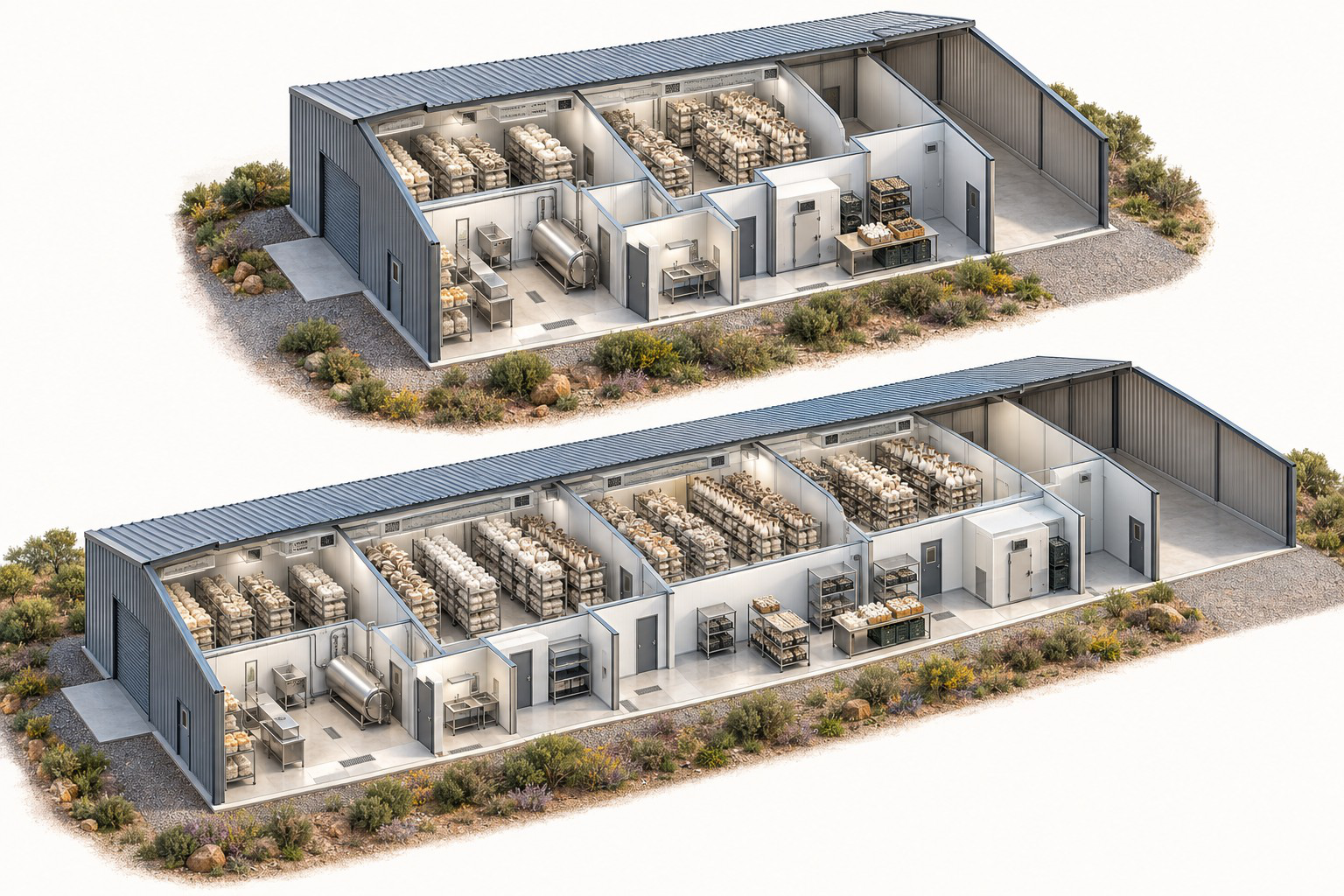
Substrate preparation leads to clean inoculation, incubation, fruiting, then packing and cold storage. Wet preparation stays separate from the clean inoculation area.
Sealed, washable insulated rooms will have controlled fresh air, humidity and temperature, with drainage and removable racks for cleaning.
Locally available wheat straw is central to the oyster-growing vision. King oyster and shimeji will require crop-specific substrate recipes and trials.
For kitchens, retailers & mushroom lovers
Let’s talk mushrooms.
Tell us what you’re looking for, whether it’s a once-off order or a regular wholesale supply. The farm is in development; availability, pricing and delivery will be confirmed personally.
Delicate fans. A versatile kitchen favourite.
Firm texture. A substantial gourmet mushroom.
Small clustered mushrooms, planned initially at trial scale.
Start a conversation
Complete the form to prepare an email. Your email app will open so you can review and send it.
joshuamichau@gmail.com ↗Funding · Equipment · Partnerships
Build the farm.
Grow the opportunity.
We welcome conversations with funders, equipment sponsors and partners to establish a modular gourmet mushroom farm. Land is already acquired. We seek R460,000 for construction and equipment for the 250 kg/week operation, using the revised target budget.
Production target
An owner-managed 250 kg/week farm focused on proving yields, building an order book and establishing a reliable production system.
*Estimates at stable production, not current revenue. Cash surplus includes owner remuneration, staff, expected rent, mortgage and rates; before tax, new finance repayments and further capital spending. Yields, prices and costs need trials and quotations. The usable load and cycle time of the proposed 900 L autoclave require validation.
| Budget line | 250 kg/week |
|---|---|
| Substrate spawn and filter bags | R7,368 |
| Sales packaging | R8,233 |
| Electricity | R20,971 |
| Hired staff | R5,000 |
| Owner remuneration | R15,000 |
| Delivery and selling | R6,000 |
| Water waste hygiene and testing | R3,600 |
| Mortgage payment | R7,300 |
| Rates and taxes | R1,300 |
| Total cash outflows | R74,773 |
| Mushroom sales | R132,968 |
| Expected rent after vacancy | R4,750 |
| Cash surplus before tax and new finance | R62,945 |
Substrate, spawn and filter bags are set at one-fifth of the previous combined allowance, an 80% reduction. Maintenance, insurance, admin, marketing and the rental maintenance reserve have no allowance. Production quantities and selling prices are unchanged; totals are calculated before rounding.
| Budget line | 250 kg/week |
|---|---|
| Shed and structural slab | R150,000 |
| Insulated room envelopes and doors | R150,000 |
| Climate control and cold refrigeration | R50,000 |
| Racking and handling | R50,000 |
| 900 L autoclave | R50,000 |
| Preparation and clean room equipment | R10,000 |
| Total funding envelope | R460,000 |
These are target allowances pending quotations. No separate allowance is included for wet area floors and drainage, site services and electrical connection, essential load backup, design approvals and commissioning, contingency or working capital.
Under the plan’s sales ramp and one-month collection assumptions, the operating cash deficit peaks at R257,037. This requirement is shown separately in the plan and is excluded from the R460,000 funding envelope.
Grant funding or patient investment towards the R460,000 construction and equipment target budget. Contingency and working capital are excluded.
Grow-room panels, racking, sterilisation equipment, ventilation, refrigeration and processing equipment.
Technical expertise, buyer relationships, training support and collaboration on a replicable growing model.
Begin a partnership
Tell us how you’d like to contribute. We’ll discuss the project, practical needs and next steps.
joshuamichau@gmail.com ↗
Food · People · Land · Opportunity
Social impact
A farm with a wider purpose.
Myco Vera’s ambition is to create practical livelihoods through mushroom cultivation, beginning with a working farm and developing a model that others can learn and replicate.
Local work & skills
The owner will work in the business, with R5,000 per month allocated to hired assistance. The longer-term aim is to create opportunities for women and local unemployed people as production and sales grow. Training would cover cultivation, hygiene, harvesting and packing.
More value from local resources
The oyster-growing vision uses locally available wheat straw. Spent substrate may provide a route into composting and soil improvement, once suitability and handling have been established.
A model others can grow
The longer-term aim is a cooperative grower network: practical training, modular growing spaces and shared opportunities. Future spawn production could help support participating growers.
Progress that can be measured
Track paid hours of assistance, training completed, kilograms sold, substrate reused and electricity per kilogram. These are intended outcomes to work towards, not impact already achieved.
Start small. Prove the model. Share the knowledge.
Grow food.
Explore a partnership ↗Grow opportunity.